


Ground-Mounted Solar PV Approval 2026: Site Assessment Criteria in Germany
When evaluating sites for ground-mounted photovoltaic (PV) systems in Germany, various criteria are considered, which are divided into different categories. These categories include exclusion criteria, restriction criteria, and promotion criteria. Each category contains specific criteria that determine the suitability of an area for installing ground-mounted PV systems. In 2026 as well, a careful site assessment remains the basis for a swift approval procedure.
Key Points at a Glance
Criteria Categories: The evaluation of sites for ground-mounted PV systems is based on exclusion, restriction, and promotion criteria, which consider environmental protection, land use, and government funding opportunities.
State-Specific Features: Each federal state has specific guidelines and requirements, such as the protection of landscapes, moors, and the promotion of biodiversity-friendly projects.
Simplified Approval: Since 2023, PV systems in outdoor areas along highways and railway lines have been subject to simplified approval procedures, promoting their development.
Two routes to building rights: Either privileged status within the 200-metre strip under § 35 Abs. 1 Nr. 8b BauGB, or a municipal development plan (Bebauungsplan), which typically takes one to three years.
Costs and applications sit with the developer: The project developer files every application, commissions the expert reports and bears the costs. The landowner incurs no approval costs.
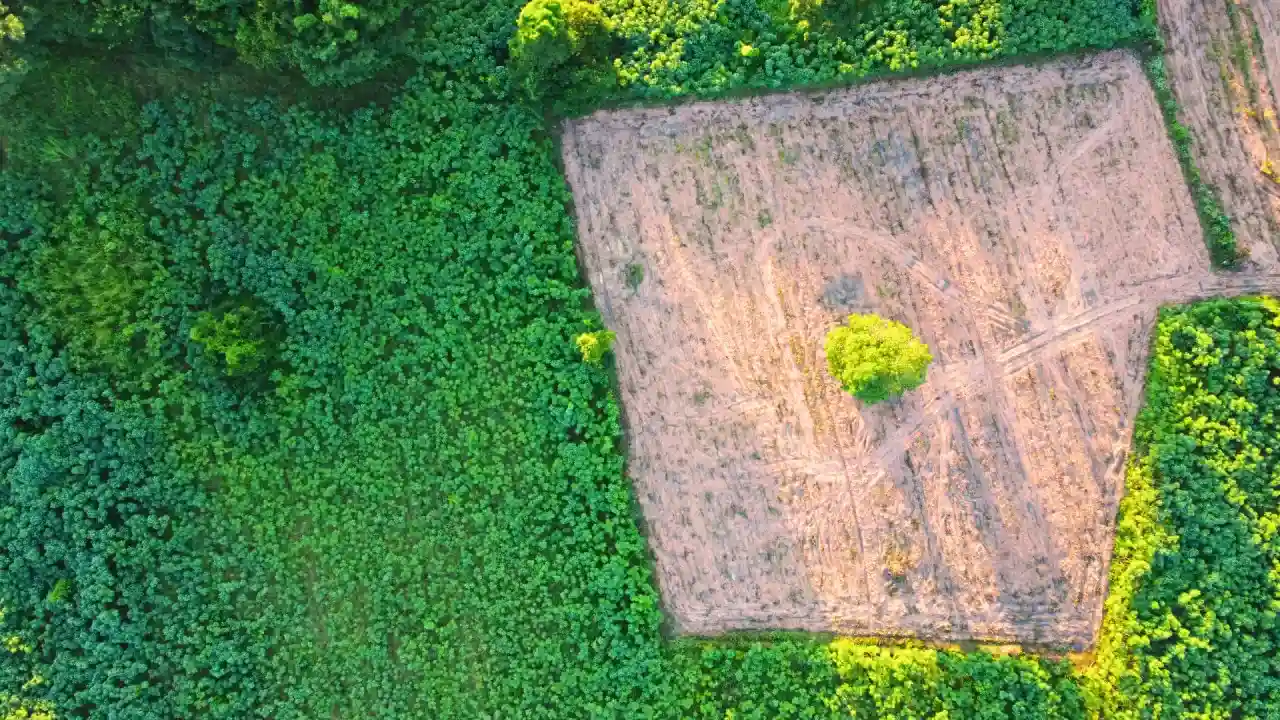
Exclusion Criteria for Ground-Mounted Systems
Exclusion criteria are conditions under which an area is fundamentally not suitable for ground-mounted PV systems. These criteria protect sensitive environmental areas and ensure that the installation of PV systems does not negatively impact protected habitats or landscapes. For certain areas, a building permit is also required to ensure compliance with all regulatory requirements. Examples of exclusion criteria include:
-
Natura 2000 Sites: Protected areas according to EU directives for preserving endangered habitats and species.
-
Nature Conservation and Landscape Protection Areas: Areas that enjoy special protection under national laws.
-
Watercourses and Water Protection Strips: Areas along rivers and lakes that are essential for protecting the water system.
-
Flood Areas: Areas that are particularly vulnerable to flooding and therefore cannot be built upon.
-
Forest and Tree Stands: Forests and larger tree stands are generally excluded from use.
-
Legally Protected Biotopes and Natural Monuments: Areas of special ecological or cultural significance.
-
Settlement Areas: Especially densely populated areas are unsuitable for large-scale PV systems.
Restriction Criteria
Restriction criteria are conditions that allow land use for ground-mounted PV systems under certain prerequisites but require detailed case-by-case examination and a comprehensive approval process. These criteria may restrict the installation of PV systems or require additional measures to ensure compatibility with other uses or protection regulations.
Restriction Areas II: Rather Unsuitable
These areas require individual assessment as they are potentially suitable but must meet specific conditions. Examples include:
-
Agricultural Priority Areas: Areas primarily reserved for agriculture.
-
Grassland Management: Absolute grassland that serves as a production basis for fodder farming operations.
-
Ecologically Valuable Areas Without Protection Status: Areas of high ecological significance that do not have formal protection status.
-
Ground-Mounted PV Systems: In North Rhine-Westphalia, nature conservation criteria must be met when approving ground-mounted PV systems. Operators must comply with at least three of five introduced criteria, while strict protected areas under the Federal Nature Conservation Act are exempt to ensure nature protection.
Restriction Areas I: Only Conditionally Suitable
These areas are fundamentally suitable but subject to certain restrictions, requiring detailed case-by-case examination. Due to the higher (financial) effort required for examining and developing a solar park on these areas, many project developers still shy away from leasing such areas:
-
Priority Areas for Peat Conservation: Areas serving to preserve peat landscapes and requiring climate-friendly management methods.
-
Moors: Low moors and high moors that function as important CO₂ storage.
-
Valuable Areas for Guest and Breeding Birds: Areas of high importance for certain bird species.
-
Areas Meeting Requirements for Landscape Protection Designation: Areas that could potentially fall under landscape protection.
-
Landscape Units of High Significance: Particularly valuable landscape areas that shape the landscape.
According to the Federal Building Code (BauGB), certain projects, such as the use of areas along highways and railway lines for photovoltaic systems, can be facilitated without requiring a development plan.
Promotion Criteria
Promotion criteria refer to areas that are particularly suitable and can be considered for the installation of ground-mounted PV systems under government funding programs. These areas are often located near existing infrastructure such as highways or railway lines and offer high potential for efficient use. Since January 1, 2023, PV systems in outdoor areas are privileged under § 35 Abs. 1 Nr. 8 b) BauGB under certain conditions, particularly along highways or railway lines, through outdoor area privileges, meaning that construction is no longer dependent on a development plan. Owners of suitable land can lease their open space for photovoltaics and benefit from this potential.
Overview of Criteria
| Category | Criterion | Description |
|---|---|---|
| Exclusion Criteria | Natura 2000 Sites | EU-wide protected areas for preserving endangered habitats and species. |
| Nature Conservation and Landscape Protection Areas | Nationally protected areas with special protection needs for nature and landscape. | |
| Watercourses and Water Protection Strips | Protection zones along water bodies to maintain ecological balance. | |
| Flood Areas | Areas at risk during floods that cannot be built upon. | |
| Forest and Tree Stands | Forests and larger tree stands are generally unsuitable for PV systems. | |
| Legally Protected Biotopes and Natural Monuments | Areas of special ecological or cultural significance that are protected. | |
| Settlement Areas | Densely populated areas are unsuitable for large-scale PV systems. | |
| Restriction Criteria II | Agricultural Priority Areas | Areas primarily reserved for agriculture that allow PV system use only under certain conditions. |
| Grassland Management | Absolute grassland serving as production basis for fodder farming operations requiring special use conditions. | |
| Ecologically Valuable Areas Without Protection Status | Areas of high ecological significance without formal protection status requiring individual assessment. | |
| Restriction Criteria I | Priority Areas for Peat Conservation | Areas for preserving peat landscapes requiring climate-friendly management methods. |
| Moors | Low moors and high moors functioning as important CO₂ storage requiring special protection measures. | |
| Valuable Areas for Guest and Breeding Birds | Areas of high importance for certain bird species requiring careful compatibility assessment. | |
| Landscape Units of High Significance | Particularly valuable landscape areas shaping the landscape and thus enjoying special protection. | |
| Promotion Criteria | Proximity to Existing Infrastructure | Areas near highways, railway lines, or in disadvantaged areas offering high potential for efficient use. |
| Ground-Mounted System | Specific requirements and funding opportunities for private ground-mounted photovoltaic systems, including planning, approval, and costs. |
State-Specific Criteria
Each federal state in Germany has specific requirements and guidelines for ground-mounted photovoltaic systems that consider both general protection measures and regional particularities. In many cases, a building permit is required, with regulations varying among federal states. The following criteria have been summarized based on available guidelines and handouts:
-
Baden-Württemberg: Focus on protecting nature reserves and strict requirements for compliance with landscape protection guidelines.
-
Bavaria: Clear regulations for site selection with particular attention to agricultural land and ecological design.
-
Brandenburg: Special provisions for landscape protection areas and requirements for moor PV and agri-PV.
-
Hesse: Focus on nature conservation aspects and integrated concepts for agricultural use.
-
Mecklenburg-Western Pomerania: Strict assessment criteria for outdoor areas and spatial planning evaluations.
-
Lower Saxony: Guidelines for nature-compatible design and recommendations from spatial planning perspective.
-
North Rhine-Westphalia: Guidelines for construction planning and special requirements for landfill sites.
-
Rhineland-Palatinate: Concepts for nature-friendly design and consideration of biodiversity-promoting measures.
-
Saxony: Guidelines for promoting biodiversity in solar projects.
-
Thuringia: Orientation aids for sustainable planning of solar parks.
The Route to Building Rights: Privileged Status or Development Plan
The criteria in the previous sections answer the question of whether a site is suitable. The approval itself answers the question of how a suitable site becomes a buildable solar park. Germany offers two routes, and which one applies depends almost entirely on the site's location.
Privileged status in the outer zone under § 35 Abs. 1 Nr. 8b BauGB
Almost all open land sits, in planning terms, in the outer zone (Außenbereich) under § 35 BauGB. Building there is fundamentally unwanted unless the project is expressly privileged. Since 1 January 2023 this applies to photovoltaic systems on land within 200 metres of federal motorways or of railway lines of the supra-regional network with at least two main tracks, measured from the outer edge of the carriageway or track bed. On these sites a solar park no longer needs a development plan, only the building permit of the lower building authority.
Privileged status is not a blank cheque, however. Even within the 200-metre strip, no public interests may stand in the project's way: species protection, water law, heritage protection and the motorway's building exclusion zone are examined in the building permit procedure just as they would be in a development plan. Under § 35 Abs. 5 BauGB the operator must also declare a decommissioning obligation, which the authority secures with a financial security.
In addition, in 2023 the legislator privileged small agri-PV systems of up to 2.5 hectares under § 35 Abs. 1 Nr. 9 BauGB where they have a spatial and functional link to an agricultural holding. Neither provision covers the classic large solar park on a disadvantaged arable site; it takes the second route.
The development plan procedure step by step
Without privileged status, only the municipality creates the right to build by adopting a development plan (Bebauungsplan), usually as a special-use zone designated for photovoltaics. The procedure follows the Federal Building Code and runs through fixed stages:
- Resolution to draw up the plan (§ 2 Abs. 1 BauGB, Aufstellungsbeschluss): The municipal council resolves to draw up a development plan for the site. This is the first political decision and usually the moment the developer presents the project publicly.
- Early participation (§ 3 Abs. 1 and § 4 Abs. 1 BauGB): The public, neighbouring municipalities and public authorities such as the nature conservation authority, water authority, agricultural office and grid operator comment on the outline of the plan.
- Draft plan and environmental report: The planning office prepares the drawings and written stipulations, the justification and the environmental report with the expert studies on species protection, impact mitigation, glare and landscape.
- Formal public display (§ 3 Abs. 2 and § 4 Abs. 2 BauGB, Offenlage): The draft is published for one month, anyone can submit comments, and the authorities are consulted again.
- Weighing and adoption (§ 10 BauGB, Satzungsbeschluss): The council weighs all comments, adopts the plan as a bylaw and publishes it. The development plan enters into force upon publication.
Because the land-use plan (Flächennutzungsplan) almost always still shows the site as agricultural land, it must be amended in parallel, which the Building Code expressly permits through the parallel procedure under § 8 Abs. 3 BauGB. In practice a project-related development plan under § 12 BauGB is frequently chosen, in which the developer, as project sponsor, concludes an implementation contract with the municipality and commits to realising the project within a deadline.
How long the approval takes
From the resolution to draw up the plan to the building permit typically takes one to three years. The development plan stages alone usually require twelve to eighteen months, because every participation round has deadlines and the council decides only at its scheduled meetings. The biggest time drivers, however, lie outside the procedure: the species survey must cover a full growing season, the grid connection request has its own processing periods, and anyone seeking EEG support must wait for one of the Federal Network Agency's auction dates. On privileged sites the development plan is dropped, which shortens the process noticeably, but the specialist assessments remain.
Who Applies, Who Pays, Who Decides
For landowners, the division of roles in the approval procedure is perhaps the most important piece of information: the application and the costs sit with the project developer, the decision with the municipality.
The project developer as applicant
At every stage the applicant is the developer or the operating company it has founded. It asks the municipality to initiate the development plan procedure, commissions and pays the planning office and all expert consultants, submits the grid connection request to the grid operator, files the building application and takes part in the auction. The municipality's planning costs are transferred to it through an urban development contract under § 11 BauGB. The landowner incurs no approval costs in this process. A well-drafted lease states this explicitly and also stipulates that the landowner owes nothing if the procedure fails.
The municipality with planning sovereignty
The municipality decides freely whether to draw up a development plan. Under § 1 Abs. 3 BauGB there is no legal entitlement to one, and it cannot be established by contract either. Many municipalities have in recent years adopted their own criteria catalogues or open-space concepts that define which sites they are willing to develop at all, how much land in total, which distances to villages apply, and which requirements are placed on landscaping, citizen participation or a municipal stake. Anyone planning a project should know these resolutions before approaching the municipality.
An important argument for the municipality is the municipal participation under § 6 EEG. Operators may pay municipalities within 2,500 metres of the plant up to 0.2 cents per kilowatt-hour fed in, and are reimbursed this amount by the grid operator. For the municipality this is a reliable income over twenty years and more, flowing in addition to trade tax and independently of the landowner's rent.
EEG Land Catalogue, Auctions and Direct Marketing
The approval says whether building is allowed. Whether building pays off is decided, among other things, by the Renewable Energy Sources Act (EEG) with its land catalogue in § 37 Abs. 1 EEG 2023. Only plants on sites in this catalogue can receive EEG remuneration. They include, among others:
- sealed surfaces and conversion sites from former commercial, transport, residential or military use,
- a 500-metre strip along motorways and railway lines (as opposed to the 200 metres of the planning-law privilege),
- land in commercial and industrial zones as well as certain water surfaces for floating PV,
- agricultural land in disadvantaged areas, which for a long time was admitted only via the state opt-in clause and has since been largely included in the catalogue, with the states able to set restrictions,
- agri-PV, moor PV and car-park PV as special solar plants with their own requirements.
Plants of one megawatt and above must take part in the Federal Network Agency's auctions to obtain an award and thus a legally secured remuneration. A bid requires a development plan that has entered into force, or privileged status. Alternatively the operator sells the electricity through direct marketing or a long-term power purchase agreement, the so-called PPA, to a company. This route is also open to sites outside the EEG catalogue, but carries the market price risk and requires correspondingly favourable construction and grid connection costs. For the approval itself the marketing route makes no difference.
Specialist Assessments: Environment, Species, Water, Heritage, Neighbours
Between the resolution to draw up the plan and its adoption lies the real work: the expert reports that demonstrate the project's compatibility with nature, landscape and neighbours. In practice they decide the duration and outcome of the procedure.
Environmental assessment and EIA screening
Every development plan undergoes an environmental assessment under § 2 Abs. 4 BauGB, documented in the environmental report. It examines the effects on soil, water, climate, fauna, flora, landscape and people. Whether the project additionally requires a formal environmental impact assessment under the UVPG is decided by a screening based on size, location and sensitivity of the site. For most solar parks on unencumbered sites the environmental assessment within the planning procedure suffices.
Species protection
The prohibitions of § 44 of the Federal Nature Conservation Act apply independently of the development plan. A survey over one growing season therefore records which breeding birds, reptiles, amphibians and bats use the site. Typical conflict species on arable land are skylark, lapwing, grey partridge and sand lizard. If they are found, avoidance measures such as construction-timing rules and advance compensation measures such as skylark plots, flower strips or replacement habitats are required. The survey is the most frequent cause of delay: it is possible only in certain months, and a missed season sets the project back by a year.
Impact mitigation rule and compensation land
A solar park is an intervention in nature and landscape under § 14 BNatSchG. The impact mitigation rule requires it to be avoided, minimised and the remainder compensated. Because the soil under the modules remains unsealed and the area is maintained as extensive grassland, a large part of the compensation can be provided within the plant. Remaining deficits are covered by external compensation land or eco-accounts. The assessment methods differ between the federal states; the principle is the same everywhere.
Landscape protection, nature reserves, FFH and water protection
In a landscape protection area a solar park is fundamentally prohibited because the protection ordinance forbids changes to the landscape. It is possible only with an exception or exemption from the nature conservation authority, or if the affected part is released from the protected area, both discretionary decisions with widely varying regional practice. Nature reserves and FFH sites of the Natura 2000 network are as a rule ruled out, and sites in the immediate vicinity also need an FFH screening under § 34 BNatSchG. In water protection areas the zone decides: zones I and II are off limits, while in zone III a plant may be permissible with conditions on foundations, transformers and cleaning agents.
Floodplains
In designated floodplains, § 78 of the Federal Water Act imposes a building ban and prohibits the designation of new building zones. An exception is possible only if flood discharge and retention space are not impaired. For elevated modules this is affirmed in individual cases, but it is not the rule. Sites with a rarer flood risk outside the designated areas are permissible but require adapted foundations and module heights.
Heritage protection and archaeological monuments
The heritage authority checks whether archaeological monuments or the setting of a listed building are affected. In areas of archaeological suspicion it usually requires a preliminary investigation or construction monitoring at the developer's expense. Finds delay the pile-driving works but rarely prevent the project, because the modules can be mounted without deep ground intervention.
Distance to residential buildings and glare report
There is no nationwide minimum distance to residential buildings. The municipality sets it in the development plan, usually guided by its own criteria catalogue, and as a rule requires landscaping with hedges or rows of trees. Where residential buildings, roads, railway lines or airfields are positioned such that reflections from the modules could reach them, a glare report is prepared. It calculates the glare periods over the year and compares them with the light immission guidelines of the state working group on immission control. Exceedances can usually be remedied through module tilt, anti-reflective glass or visual screening.
Grid Connection and the Grid Connection Request
Without a grid connection there is no project. The developer therefore usually submits the grid connection request (Netzanfrage) to the responsible grid operator even before the council's resolution. The grid operator determines at which grid connection point the planned capacity can be fed in, which grid reinforcements are needed and what connection costs arise. The commitment is time-limited and tied to the specific project, which is why approval and grid connection must align in time.
Landowners should understand that a grid connection request is a binding procedural step with deadlines, reservation rules and in some cases advance payments, not a loose preliminary talk. A developer who can already present a grid connection commitment has removed the project's biggest uncertainty. Conversely, a site far from the nearest substation or in a congested grid area is often harder to realise than a site with demanding species protection.
Agri-PV: Special Rules for Dual Use
Agri-photovoltaics combines electricity generation and agricultural use on the same land. The technical requirements are defined by DIN SPEC 91434: it distinguishes high-elevated systems farmed underneath from ground-near systems farmed between the module rows. In both categories the large majority of the area must remain agriculturally usable, and the yield may not fall below a defined share of the reference yield without the plant. The EEG rewards agri-PV with a bonus in the auction. Under planning law, small systems of up to 2.5 hectares linked to an agricultural holding are privileged; larger ones need a development plan like any ground-mounted system. The open legal questions of this still young plant class are covered in the article Agri-photovoltaics and legal uncertainty.
Decommissioning, Security and Construction Time
Under § 35 Abs. 5 BauGB, the operator of a privileged plant must declare that it will dismantle the plant after use ends and remove any soil sealing. For plants within a development plan, the same obligation is laid down in the urban development contract and the building permit. The authority secures it through a financial security, usually a bank guarantee equal to the estimated decommissioning costs. Landowners should additionally agree their own decommissioning security in their favour in the lease so that they are protected even if the operator becomes insolvent.
The actual construction is short compared with the approval: after construction starts, it usually takes a few months until the mounting structure, modules, inverters and transformer station are in place. The cable route to the grid connection point and the grid operator's works on the connection often take longer. Construction windows can also be restricted by species protection, for example a clearing ban during the breeding season or rules on pile-driving outside certain months.
What Landowners Can Check in Advance
Before you talk to a project developer, it is worth looking at the hard criteria: Is the site in a protected area, a floodplain or forest? Does it belong to the EEG catalogue, for example as a disadvantaged area or within the 500-metre strip along a motorway or railway line? Does it even lie within the 200-metre strip of the planning-law privilege? How far away is the nearest substation? The free area check answers exactly these questions in a few seconds using official geodata. If there is no exclusion reason, a conversation with the municipality about its stance on ground-mounted systems is the sensible next step, because without municipal support no project comes about.
Summary
The evaluation of areas for installing ground-mounted photovoltaic systems in Germany is based on clearly defined criteria divided into exclusion, restriction, and promotion criteria. Exclusion criteria ensure that sensitive environmental and landscape areas remain protected. Restriction criteria require individual examination to ensure compatibility of PV systems with existing uses and protection regulations. Promotion criteria identify particularly suitable areas that enable efficient use through their proximity to infrastructure. A structured evaluation of these criteria and consideration of costs is crucial for sustainable and environmentally compatible development of photovoltaics in Germany. The approval procedure itself runs either through privileged status within the 200-metre strip or through the municipal development plan, typically takes one to three years, and rests entirely with the project developer in terms of applications, expert reports and costs.
Frequently Asked Questions on Ground-Mounted PV Approval
This article provides a general overview of the approval procedure for ground-mounted photovoltaic systems and does not constitute legal advice. Procedures and requirements differ by federal state, district and municipality. Have your specific lease reviewed by a lawyer before signing.